Wavestek Power Solutions

Author name: admin

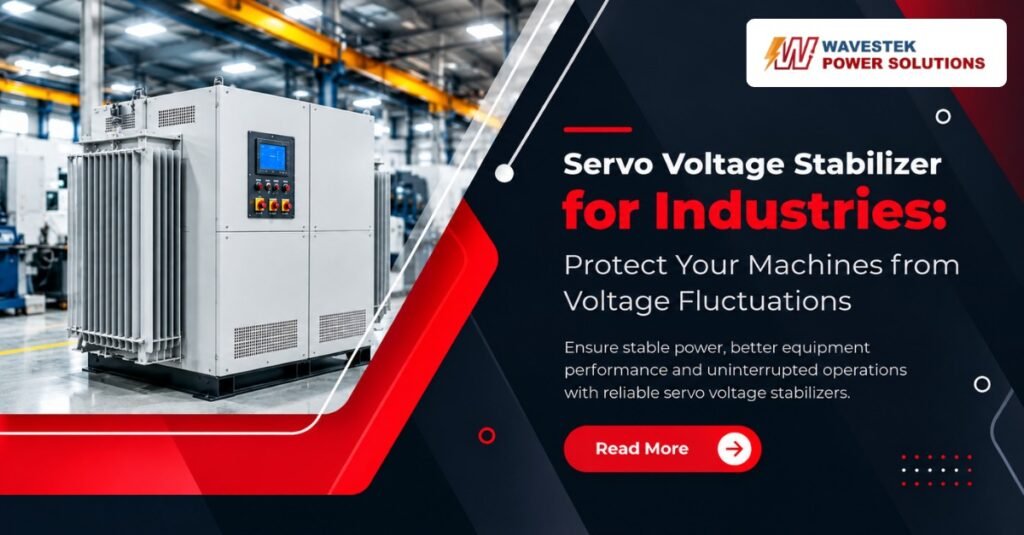
Industrial servo voltage stabilizer designed to regulate voltage fluctuations for factory machinery and production equipment
Blog

Servo Voltage Stabilizer for Industries: Protect Your Machines from Voltage Fluctuations

Industrial machines need a stable power supply to operate properly. However, voltage fluctuations can occur due to changes in electrical load or problems in the power supply. These fluctuations may affect machine performance, interrupt production, and increase maintenance costs. A servo voltage stabilizer for industries helps maintain a more consistent output voltage, making it a useful solution for factories and industrial facilities that depend on reliable electrical equipment. What Is a Servo Voltage Stabilizer? A servo voltage stabilizer is an electrical device that automatically adjusts voltage to help maintain a stable output when the incoming supply voltage changes. It uses a servo motor and a voltage correction mechanism to regulate the output. This helps connected equipment receive voltage within the stabilizer’s specified operating range. Servo stabilizers are commonly used in industrial environments where voltage stability is important for machine performance. How Do Voltage Fluctuations Affect Industrial Machines? Voltage fluctuations can create several problems for industrial operations. Machine performance issues Some machines may not operate as expected when the supply voltage moves outside their required range. Production interruptions Voltage-related faults can interrupt manufacturing processes and delay scheduled work. Increased maintenance costs Repeated electrical stress may contribute to equipment problems, leading to additional inspection and repair expenses. Risk to sensitive equipment CNC machines, automation systems, and other electronic equipment may require a stable power supply to operate reliably. Choosing suitable voltage regulation equipment can help reduce these risks. Why Do Industries Need a Servo Voltage Stabilizer? A servo voltage stabilizer can help industries manage voltage variations and support reliable equipment operation. 1. Automatic Voltage Correction The stabilizer adjusts its output in response to changes in the incoming voltage, within its rated correction range. 2. Support for Industrial Equipment Depending on its capacity and specifications, a servo stabilizer can be used with machinery, production equipment, and other industrial electrical loads. 3. Reduced Voltage-Related Disruptions Maintaining a more stable voltage can help reduce problems associated with unsuitable supply voltage. However, it does not replace proper electrical protection or maintenance. 4. Suitable Options for Different Requirements Industries can choose stabilizers based on their connected load, input voltage range, output requirements, and operating conditions. How to Choose the Right Servo Voltage Stabilizer for Your Industry Choosing the correct capacity is important for safe and reliable operation. Before purchasing a stabilizer, consider these factors: Total connected load: Calculate the power requirements of the equipment that will use the stabilizer. Single-phase or three-phase supply: Select a model compatible with your electrical system. Input voltage range: Check how much variation occurs in your incoming power supply. Equipment requirements: Consider the voltage tolerance and starting current of connected machinery. Installation environment: Check ventilation, temperature, dust, and available installation space. Technical support: Choose a supplier that can assist with capacity selection, installation, and maintenance. Consult a qualified electrical professional to determine the appropriate stabilizer rating for your application. Which Industries Can Benefit from Servo Voltage Stabilizers? Servo voltage stabilizers may be suitable for several industrial applications, depending on the equipment and electrical requirements. Manufacturing units: To support machinery that requires stable voltage. CNC and machine shops: To help maintain suitable voltage for precision equipment. Textile industries: To support electrical equipment used in production. Printing and packaging units: To help reduce voltage-related operating issues. Hospitals and laboratories: For compatible equipment that requires regulated voltage. Commercial facilities: To support selected electrical systems and equipment. The correct model depends on the load, operating conditions, and manufacturer’s specifications. Servo Voltage Stabilizer vs. Regular Voltage Stabilizer Both devices are designed to regulate voltage, but their correction mechanisms and capabilities can differ. A servo voltage stabilizer uses a servo motor-driven mechanism to adjust voltage. Other stabilizer designs may use different electronic or switching technologies. For industrial applications, compare voltage correction accuracy, response time, capacity, efficiency, overload capability, and maintenance requirements instead of choosing based on price alone. Protect Your Industrial Equipment with Wavestek Power Solutions Voltage fluctuations can affect production schedules and equipment performance. Selecting a suitable servo voltage stabilizer can help businesses manage these variations and maintain a more reliable power supply. Wavestek Power Solutions provides power backup and electrical power conditioning solutions for different business requirements. Looking for a servo voltage stabilizer for industries? Contact Wavestek Power Solutions to discuss your equipment load, voltage requirements, and suitable stabilizer options. Choose the right voltage protection. Support smoother industrial operations.  
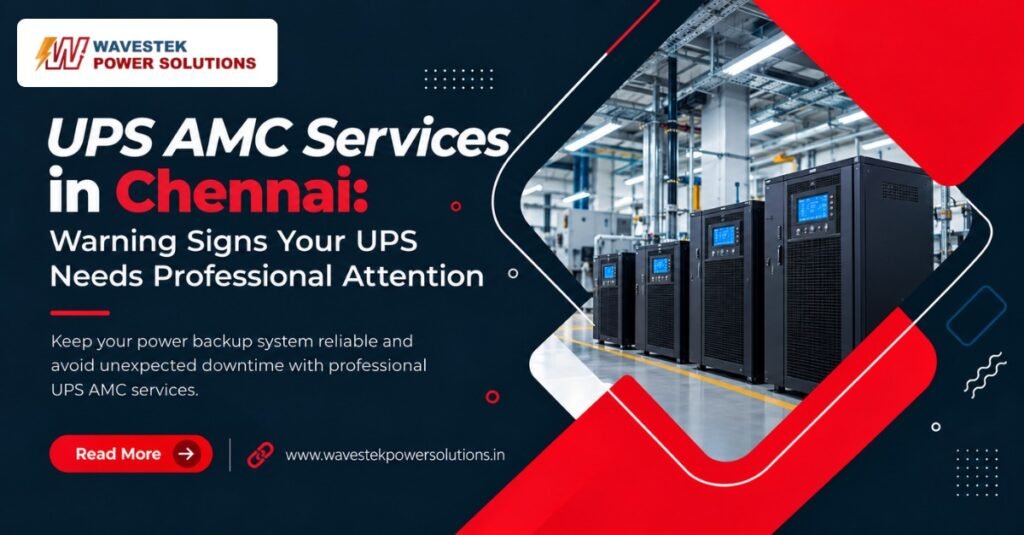
Technician inspecting a UPS system and battery backup equipment during scheduled maintenance in Chennai
Blog, UPS

UPS AMC Services in Chennai: Warning Signs Your UPS Needs Professional Attention

A UPS helps keep your business running when the power supply fails. But what happens when your UPS stops working properly during an unexpected power cut? It can interrupt daily operations, affect important equipment, and cause unnecessary delays. Regular maintenance can help identify problems before they become major failures. With professional UPS AMC services in Chennai, businesses can maintain their UPS systems and reduce the risk of unexpected downtime. Why Does Your UPS Need Regular Maintenance? Over time, UPS batteries can lose their performance, cooling systems may collect dust, and electrical components can develop faults. Without regular inspection, these issues may go unnoticed until the UPS is needed. An Annual Maintenance Contract (AMC) helps businesses schedule routine inspections and servicing to keep their power backup systems in good working condition. 5 Warning Signs Your UPS Needs Professional Attention 1. Reduced Battery Backup Time Does your UPS provide less backup than it did before? This may indicate battery ageing, charging issues, or increased connected load. A professional inspection can help identify the cause. 2. Frequent Warning Alarms Repeated beeping or warning indicators should not be ignored. They may signal a battery fault, overload, overheating, or another system issue. Check the manufacturer’s instructions and arrange a service inspection when necessary. 3. Unexpected UPS Shutdowns If your UPS switches off unexpectedly or fails to support connected equipment, it may have a battery, component, or load-related problem. Timely servicing can help identify the issue. 4. Overheating or Unusual Noise Excessive heat, unusual fan noise, or a burning smell can indicate a serious problem. If you notice a burning smell or abnormal overheating, stop using the equipment if it is safe to do so and contact a qualified technician. 5. Frequent Battery or System Errors Repeated battery warnings, charging problems, or fault indicators may mean your UPS needs professional attention. Regular checks can help identify these problems before they cause an interruption. What Is Included in UPS AMC Services? The exact services depend on the UPS model and the maintenance agreement. A typical UPS AMC may include: UPS system inspection: Checking the general condition and operating performance. Battery health checks: Inspecting battery condition and charging performance. Electrical and connection checks: Looking for loose connections or visible signs of damage. Cooling and ventilation checks: Ensuring the system has suitable airflow. Fault diagnosis: Identifying potential issues and recommending corrective action. Scheduled preventive maintenance: Planning inspections to reduce the risk of unexpected breakdowns. Before choosing an AMC, confirm the service frequency, emergency response terms, labour coverage, and whether spare parts and battery replacements are included. Why Choose an AMC for Your Business UPS? Businesses that depend on computers, servers, communication systems, and other essential equipment need reliable power protection. An AMC helps make maintenance more organised and provides a planned approach to checking UPS performance. The benefits may include: Early identification of potential faults Better monitoring of battery condition Reduced risk of unexpected downtime Planned maintenance expenses Access to professional technical support, according to the agreement An AMC cannot guarantee that breakdowns will never happen, but regular maintenance can help reduce avoidable risks. How to Choose the Right UPS AMC Service Provider in Chennai When searching for UPS AMC services near me, do not compare providers based on price alone. Consider their experience with your UPS type, the scope of maintenance, response time, and technical support. Before signing an agreement, ask these questions: Does the AMC cover my UPS model and capacity? How often will preventive maintenance be carried out? Is emergency service included? Are replacement parts and batteries covered? Will I receive a service report after each visit? These details help you understand what you are paying for and choose a maintenance plan that suits your business. Keep Your Business Power Backup Ready with Wavestek Power Solutions A UPS problem can occur when you least expect it. Identifying warning signs early and arranging regular maintenance can help protect your equipment and keep daily operations running smoothly. Wavestek Power Solutions helps businesses explore suitable power backup and maintenance options based on their requirements. Looking for UPS AMC services in Chennai? Contact Wavestek Power Solutions to discuss your UPS maintenance needs and find a suitable service plan for your business. Plan your maintenance today. Be better prepared for tomorrow’s power interruptions

Online UPS system and battery backup solution for reliable power protection in Chennai businesses
Blog, UPS

Best Online UPS Dealer in Chennai: Is Your UPS Ready for the Next Unexpected Power Cut?

Imagine you are working on an important task, and suddenly the power goes off. Your computer shuts down, your work gets interrupted, and you lose valuable time. This is why having a reliable UPS is important for every business. A UPS provides backup power when the main electricity supply fails. But how do you know if your UPS is ready for the next power cut? Why Is UPS Backup Important? Power cuts can interrupt daily work, affect electronic equipment, and cause data loss. A properly maintained UPS helps keep essential equipment running during power interruptions. Businesses, offices, hospitals, and IT companies can benefit from choosing the right UPS system for their power requirements. 5 Signs Your UPS Needs Attention Short backup time: If your UPS runs out of power quickly, its battery may need inspection. Frequent alarms: Repeated warning sounds may indicate a battery problem or overload. Charging problems: A UPS that does not recharge properly may need servicing. Unexpected shutdowns: Your UPS may not be able to support the connected equipment. Old batteries: Ageing batteries can lose their ability to provide reliable backup. Checking these signs early can help prevent unexpected problems. How to Choose the Right UPS Battery Choosing the correct battery is important for reliable backup performance. Before purchasing, consider: Battery compatibility: Check the battery specifications recommended for your UPS. Backup time: Choose a suitable battery configuration for your required backup duration. Quality and warranty: Check product quality and warranty conditions. Technical support: Choose a supplier that can help with installation and maintenance. If you are searching for UPS battery dealers near me, compare product suitability and service support before making a decision. Online UPS or Inverter: Which Is Better? An online UPS is suitable for sensitive equipment that needs continuous conditioned power, such as servers and critical electronic systems. An inverter may be suitable for general backup needs, depending on the equipment and system specifications. The right choice depends on your power requirements, connected equipment, and expected backup time. Find the Right UPS Solution in Chennai Don’t wait for a power cut to discover that your battery is not working properly. Regular maintenance and the right UPS capacity can help reduce unexpected interruptions. Wavestek Power Solutions helps businesses explore power backup options based on their requirements. Before purchasing a UPS or replacement battery, check the capacity, compatibility, and expected backup time. Looking for the Best Online UPS Dealer in Chennai? Contact Wavestek Power Solutions to discuss your business power backup needs. Stay prepared. Stay powered. Keep your work moving.

Three phase online UPS protecting PLCs, industrial computers, and automation control systems from power interruptions
Blog, UPS

Three Phase Online UPS Supplier: How a 3 Phase UPS Protects Industrial Automation Systems

Imagine a production line running automatically when a sudden power interruption stops the control system. Machines pause, production gets delayed, and restarting the entire process takes valuable time. For industries that depend on automated operations, a reliable power supply is essential. Even when heavy machinery has its own power source, the electronic systems controlling that machinery may still need dedicated power protection. This is where a three phase online UPS can make a difference. It helps maintain a continuous, conditioned power supply to compatible industrial automation equipment, supporting smoother and more reliable operations. What Is Industrial Automation? Industrial automation uses control systems, sensors, computers, and specialised equipment to operate industrial processes with less manual intervention. These systems help factories improve productivity, maintain consistency, and manage complex operations. Common industrial automation components include: Programmable Logic Controllers (PLCs) Human-Machine Interfaces (HMIs) Industrial computers and servers Sensors and monitoring systems Communication networks Process control and supervisory systems Although these components may consume less power than large industrial motors, they can be essential for controlling an entire production process. Protecting their power supply is therefore an important part of industrial planning. Why Do Industrial Automation Systems Need a 3 Phase UPS? Automation systems rely on electrical power to monitor equipment, process information, and coordinate operations. Power interruptions or poor power quality can affect these activities. A suitable three phase UPS can help address several challenges. 1. Helps Prevent Unexpected Control System Shutdowns When the main electricity supply fails, a properly configured UPS switches to battery operation without the typical transfer interruption associated with standby UPS systems. This can help keep supported PLCs, HMIs, industrial computers, and other critical control equipment running during a power outage. The UPS must have enough capacity and battery backup for the connected load and required operating duration. 2. Helps Protect Sensitive Electronic Equipment Industrial environments can experience voltage fluctuations and other power quality disturbances. An online UPS continuously supplies power through its inverter during normal operation, helping provide conditioned power to compatible equipment. This is useful for electronic control systems that require a stable power supply. However, a UPS should be selected alongside suitable grounding, surge protection, and other electrical safety measures. 3. Supports Communication Between Industrial Devices Automated production systems often rely on communication between controllers, sensors, monitoring devices, and central computers. If these systems lose power unexpectedly, operators may lose visibility into the production process. Providing backup to essential communication and monitoring equipment can help maintain system visibility during power interruptions. 4. Helps Reduce Production Downtime An unexpected shutdown can interrupt a production sequence and require operators to inspect equipment before restarting it. A properly sized UPS can keep critical control electronics powered during an outage, potentially reducing disruption and helping equipment follow its intended shutdown or recovery sequence. The UPS does not necessarily keep the entire factory running. Heavy motors, heaters, and other high-power loads may require separate backup arrangements. 5. Supports Safe Shutdown Procedures Some industrial processes need a controlled shutdown to protect equipment, products, or operating data. A UPS can provide the time needed for supported control systems to complete essential actions, send alerts, or shut down computers safely. The required backup duration should be determined by the process requirements and the manufacturer’s recommendations. Why Choose a Three Phase Online UPS for Industrial Applications? A three phase online UPS is designed for applications that require three phase power. Depending on its configuration, it can support suitable three phase loads or provide protected single phase outputs for critical equipment. Key considerations include: Suitable power capacity: The UPS must handle the connected load without exceeding its operating limits. Continuous conditioned output: Online conversion helps maintain a stable supply for supported equipment. Battery backup: Battery capacity determines how long the connected load can operate during an outage. Load compatibility: Motors and other inductive loads may have high starting currents and require careful assessment. Expansion planning: Future automation upgrades should be considered when sizing the system. A three phase UPS is not automatically necessary for every automation system. Some control equipment may be adequately supported by a single phase UPS, while larger facilities may require a three phase solution. How to Choose the Right 3 Phase UPS for Your Automation System Before selecting a three phase uninterruptible power supply, assess the equipment and operating conditions. Step 1: Identify critical equipment. List the PLCs, HMIs, industrial computers, communication devices, and other systems that need backup. Step 2: Calculate the electrical load. Determine the total power requirement and check the input and output phase requirements. Step 3: Decide the backup duration. Identify whether you need enough time for a controlled shutdown or continued operation during longer outages. Step 4: Check the operating environment. Temperature, dust, ventilation, and installation conditions can affect UPS performance and battery life. Step 5: Plan for maintenance. Review battery replacement requirements, service support, warranty coverage, and routine inspection needs. A professional assessment can help determine the appropriate UPS rating, battery configuration, and installation requirements. Keep Your Industrial Automation Systems Powered with Wavestek Industrial automation depends on reliable control, communication, and monitoring. Protecting these systems from power interruptions can help businesses reduce disruption and maintain more predictable operations. At Wavestek Power Solutions, businesses can explore UPS options based on their electrical loads and power backup requirements. Whether you need protection for automation controllers, industrial computers, or other critical equipment, selecting the right UPS starts with understanding your application. Looking for a reliable Three Phase Online UPS Supplier? Contact Wavestek Power Solutions to discuss a suitable power protection solution for your industrial automation system. Protect your control systems. Reduce interruptions. Keep your operations moving.

Solar battery storage system and industrial power backup solutions for reliable factory operations
Blog, Power

Power Backup Solutions for Industries: Is Solar Battery Storage Worth the Investment?

Imagine your factory has plenty of sunlight throughout the day, but electricity costs continue to rise. At the same time, unexpected power cuts interrupt production and delay important work. What if your business could store solar energy and use it when needed? Solar battery storage is becoming an option for businesses looking to manage energy consumption and improve power reliability. But is it really worth the investment for industries? Let’s explore how solar battery storage works, its benefits, its limitations, and what businesses should consider before choosing a system. What Is Solar Battery Storage? Solar battery storage allows businesses to store electricity generated by solar panels and use that energy later. Instead of using all the solar power immediately, a suitable system can save excess energy for evening operations or other periods when solar generation is low. A typical solar battery energy storage system includes: Solar panels to generate electricity. A compatible inverter to convert and manage power. Batteries to store usable energy. A monitoring system to track energy generation and consumption. Suitable electrical protection and control equipment. The system configuration depends on your facility’s energy needs and whether you want to reduce electricity costs, provide backup during outages, or achieve both goals. Why Are Industries Considering Solar Battery Storage? For industrial businesses, electricity is an important part of daily operations. A well-planned energy system can help manage power consumption while supporting essential equipment. 1. Reduce Dependence on Grid Electricity Industries that consume large amounts of electricity during the day may benefit from solar power. When solar panels generate more electricity than the facility immediately needs, a battery can store some of that energy for later use. The actual savings depend on your electricity tariff, solar generation, battery efficiency, and the amount of stored energy you can use effectively. 2. Support Operations During Power Cuts Power interruptions can affect production schedules, computer systems, and industrial control equipment. A properly designed solar battery storage system can supply selected loads during an outage. However, not every grid-connected solar installation provides backup automatically. The inverter, battery, electrical configuration, and backup circuits must support this function. For equipment that cannot tolerate even a brief interruption, an online UPS may still be necessary. 3. Manage Peak Electricity Demand Some industrial facilities consume more electricity during particular operating hours. Depending on the tariff structure and system design, stored energy may help reduce grid consumption during expensive periods. Businesses should compare the potential savings with battery costs, conversion losses, and expected battery life before making a decision. 4. Make Better Use of Solar Energy Without battery storage, excess solar electricity may be exported to the grid or curtailed, depending on the installation and applicable arrangements. A battery allows some of that excess energy to be used later. This can be helpful for businesses whose electricity demand continues after solar generation decreases. Is Solar Battery Storage Better Than a Traditional UPS? Both systems support power reliability, but they serve different purposes. Feature Solar Battery Storage Online UPS Main purpose Store energy for later use Provide continuous conditioned power to connected equipment Energy source Often solar panels, with other charging options depending on design Typically mains electricity, with batteries for backup Typical application Energy management and selected-load backup Sensitive equipment and critical loads Backup duration Depends on battery size and connected load Depends on battery configuration and connected load Best suited for Facilities seeking solar energy utilisation and backup Equipment requiring continuous power protection For many industries, combining solar battery storage with an online UPS can be more practical than choosing only one. The battery system can support energy management, while the UPS protects critical equipment from power interruptions. How Much Does an Industrial Solar Battery System Cost? The cost varies depending on the size of the solar installation, battery capacity, battery chemistry, inverter specifications, installation requirements, and electrical upgrades. A small system designed for essential office loads will have different requirements from a system intended to support selected factory machinery. Before requesting a quotation, identify: Your average daily electricity consumption. The equipment that must remain operational during an outage. The number of backup hours required. Your available roof or installation space. Your current electricity tariff and applicable export arrangements. Your budget and expected payback period. Comparing quotations based on the same capacity, usable battery energy, backup load, warranty, and installation scope makes it easier to assess value. Is Solar Battery Storage Suitable for Every Industry? Not necessarily. The right choice depends on how and when your business uses electricity. Manufacturing units: May benefit when daytime solar generation matches production demand and selected loads need backup. Warehouses: Can explore storage for lighting, security systems, communication equipment, and other essential loads. IT companies: May combine solar energy storage with online UPS systems to protect servers and networking equipment. Commercial offices: Can consider office power backup solutions that combine solar generation, batteries, and UPS protection according to their needs. Facilities operating at night: Need careful planning because solar generation is limited after sunset. Battery capacity and charging options become especially important. For high-power machinery, starting currents and load characteristics must be evaluated before deciding whether a battery system can support the equipment. How to Know Whether Your Investment Is Worth It Before installing a solar battery energy storage system, consider the financial and operational benefits together. Calculate your potential savings. Estimate how much solar electricity you can use directly and how much stored energy can replace grid electricity. Check the backup requirement. Determine which equipment needs backup and for how long. Consider battery replacement. Batteries have a limited service life, and replacement costs affect the long-term economics. Review maintenance and warranties. Check the manufacturer’s warranty, operating conditions, and service support. Compare the payback period. Consider the total installed cost, electricity savings, applicable incentives, and ongoing expenses. If your main goal is to protect critical equipment from brief interruptions, an online UPS may be the more appropriate starting point. If you also want to store solar energy and manage electricity consumption,

Online UPS system for business power backup and critical equipment
Blog, UPS

Online UPS Supplier in Chennai: Understanding UPS Capacity for Business Requirements

Imagine your business is running smoothly, and suddenly the power goes off. Computers shut down, machines stop working, and important tasks are interrupted. For many businesses, even a few minutes without power can create problems. This is why choosing the right UPS (Uninterruptible Power Supply) is important. But buying a UPS is not just about choosing a trusted brand. You also need to select the right capacity for your business requirements. If you are searching for an Online UPS Supplier in Chennai, understanding UPS capacity can help you make a better investment for your workplace. What Is UPS Capacity and Why Does It Matter? UPS capacity refers to the amount of electrical load a UPS can support. It is commonly measured in VA (Volt-Ampere) or kVA (kilovolt-ampere), while the actual usable power is measured in watts. Choosing a UPS with insufficient capacity can lead to overloads and unexpected shutdowns. On the other hand, selecting a much larger system than necessary may increase your initial investment. The goal is simple: choose a UPS that matches your equipment, power requirements, and future business needs. How to Choose the Right UPS Capacity for Your Business Every business has different power requirements. A small office may need backup for computers and networking equipment, while a hospital or manufacturing unit may require a more carefully planned power protection system. Here are a few things to consider before choosing your UPS. 1. Calculate Your Total Power Requirement Start by listing all the equipment that needs backup, such as computers, servers, networking devices, control systems, or other essential electrical equipment. Check the power consumption of each device and calculate the total load in watts. You should also consider the equipment’s starting current and any special power requirements. A qualified UPS supplier can help convert the total load into the appropriate UPS capacity. 2. Consider How Long You Need Backup Do you need enough time to save files and shut down computers safely? Or does your business need to continue operating during a longer power interruption? Your backup time determines the battery configuration required. A higher load or longer backup duration generally requires more battery capacity. Discuss your expected backup time with your supplier before making a decision. 3. Choose the Right UPS for Your Industry Different workplaces depend on different types of equipment. Offices: Computers, printers, routers, and essential workstations. Hospitals: Compatible medical equipment and critical support systems. IT companies: Servers, network devices, and essential infrastructure. Manufacturing units: Control systems, automation equipment, and other critical loads. Educational institutions: Computer labs, servers, and digital learning equipment. For sensitive equipment, an online UPS may be suitable because it provides continuous power conditioning and transfers power through its inverter. The final choice depends on the equipment’s requirements. 4. Leave Room for Future Growth Your business may add more computers, machines, servers, or workstations in the future. If your UPS is already operating close to its maximum capacity, expansion could become difficult. Consider your planned growth before purchasing a system. Choosing an appropriately sized UPS with suitable expansion options can help you avoid unnecessary replacement costs later. A Simple Example of UPS Capacity Calculation Suppose your office has equipment with a combined power requirement of 2,000 watts. You should not automatically choose a 2 kVA UPS. The UPS must support the actual wattage, and its power factor, operating limits, and recommended reserve capacity must also be considered. For example, a UPS rated at 3 kVA with a power factor of 0.9 has a nominal real-power capacity of 2,700 watts. However, the final selection must account for the manufacturer’s specifications, load characteristics, and future requirements. This is why a proper load assessment is more reliable than choosing a UPS based only on its kVA rating. Why Businesses Choose Online UPS Systems An online UPS is designed to deliver consistent, conditioned power to connected equipment. It can be especially useful in workplaces where power interruptions or fluctuations could affect operations. Some key benefits include: Continuous power protection: Helps maintain power to connected equipment during supply interruptions. Voltage conditioning: Helps protect compatible equipment from common power-quality problems. Reduced downtime: Supports essential business operations when the main power supply fails. Equipment protection: Provides an additional layer of protection for sensitive electronic systems. Business continuity: Helps keep important processes running when supported by a properly sized system and suitable battery backup. The actual protection available depends on the UPS design, installation, maintenance, and connected load. Common Mistakes to Avoid When Choosing UPS Capacity Even a good UPS may not perform as expected if it is selected incorrectly. Watch out for these common mistakes: Choosing a UPS based only on its price. Ignoring the total power consumption of connected equipment. Confusing kVA capacity with usable watt capacity. Expecting longer backup time without checking battery requirements. Forgetting to account for future expansion. Skipping professional installation and regular maintenance. Avoiding these mistakes can help you select a suitable power backup solution for your business. Find the Right Online UPS Supplier in Chennai Choosing the right UPS capacity is an important step towards protecting your business operations. From small offices to large commercial facilities, the right system should match your equipment load, backup expectations, and plans for growth. At Wavestek Power Solutions, businesses can explore power backup solutions based on their operational requirements. Whether you need an online UPS for office equipment, IT infrastructure, or industrial applications, discuss your load requirements and backup expectations before selecting a system. Looking for an Online UPS Supplier in Chennai? Contact Wavestek Power Solutions to discuss your business power backup needs and identify a suitable UPS solution. Keep your business powered. Keep your operations moving.

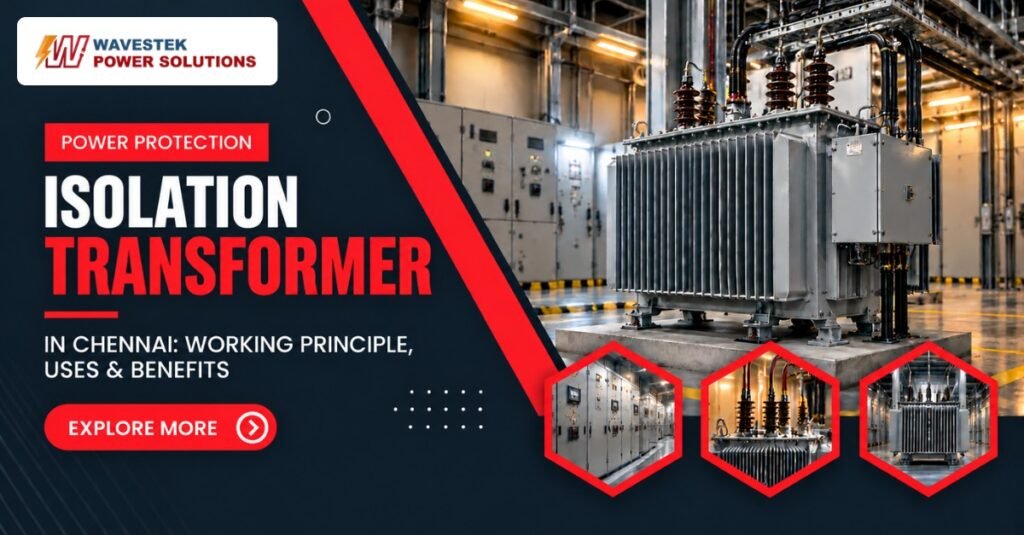
Industrial isolation transformer for CNC machines and sensitive electrical equipment supplied by Wavestek Power Solutions
Blog, UPS

Isolation Transformer in Chennai: Working Principle, Uses, and Benefits

Electrical equipment needs a stable and reliable power supply to work properly. In industries, even a small electrical disturbance can affect machine performance, interrupt production, or damage sensitive equipment. This is where an isolation transformer becomes useful. If you are looking for an isolation transformer in Chennai for your factory, commercial building, CNC machines, or UPS system, understanding how it works can help you choose the right model for your needs. What Is an Isolation Transformer? An isolation transformer is an electrical device that transfers power from one circuit to another through magnetic induction, without a direct electrical connection between the input and output windings. This separation helps reduce certain electrical noise and grounding-related issues when the transformer is correctly installed. An industrial isolation transformer is commonly used in environments where sensitive equipment needs electrical isolation and a suitable power supply. How Does an Isolation Transformer Work? An isolation transformer has two main windings: a primary winding connected to the power source and a secondary winding connected to the equipment. When electricity flows through the primary winding, it creates a magnetic field. This field transfers energy to the secondary winding without a direct electrical connection between the two windings. This design helps provide electrical isolation between the supply and connected equipment. Depending on the installation, it can also help reduce the effect of certain electrical disturbances. However, an isolation transformer does not automatically correct every voltage fluctuation or provide complete protection against all electrical faults. The right design and installation are important. Common Uses of Isolation Transformers Isolation transformers are used in different industries and commercial environments based on their electrical requirements. 1. Industrial Applications Factories use isolation transformers for selected machines, control panels, and sensitive electrical equipment. An isolation transformer for industrial applications can help provide electrical separation where it is required. 2. CNC Machines CNC machines depend on reliable electrical operation for accurate and consistent production. An isolation transformer for CNC machines may help reduce the impact of certain electrical noise issues when properly selected and installed. 3. UPS Systems An isolation transformer for UPS applications can be useful when electrical isolation is required between the UPS output and connected equipment. A UPS isolation transformer or isolation transformer for online UPS should be selected according to the UPS design, load requirements, and manufacturer’s recommendations. 4. Commercial Buildings Hospitals, offices, laboratories, and other commercial facilities may use isolation transformers for specific electrical systems that require isolation. The selection depends on the equipment and applicable safety requirements. Single-Phase vs Three-Phase Isolation Transformer Choosing between a single-phase and three-phase transformer depends on the type of electrical supply and the equipment being connected. Single-phase isolation transformer: Often suitable for compatible single-phase equipment and selected low-capacity applications. Three-phase isolation transformer: Commonly used for compatible industrial machines and larger three-phase electrical loads. Before choosing a single-phase isolation transformer, check the equipment’s voltage, current, capacity, and operating requirements. For industrial machinery, a qualified electrical professional can help determine the correct transformer rating. Benefits of Using an Isolation Transformer An isolation transformer offers several benefits when it is correctly designed for the application. Electrical isolation: Separates the input and output circuits electrically. Reduced electrical noise: Can help reduce certain types of noise affecting sensitive equipment. Support for sensitive equipment: Provides isolation where required by the equipment design. Flexible applications: Can be used in suitable industrial, commercial, laboratory, and UPS installations. Improved electrical system design: Helps meet specific isolation requirements when installed as part of a properly designed electrical system. Remember that an isolation transformer is not a voltage stabilizer or UPS. If your equipment needs voltage regulation or backup power, you may need additional equipment. How to Choose the Right Isolation Transformer in Chennai Before purchasing an isolation transformer, consider the following points. Check the load capacity Calculate the total connected load and consider the equipment’s starting current and operating conditions. The transformer capacity should match the actual application. Confirm the input and output voltage Check the voltage required by your equipment and the available electrical supply. Do not select a transformer based on capacity alone. Choose the correct phase Determine whether your application requires a single-phase or three-phase isolation transformer. Consider the application A transformer for a CNC machine may have different requirements from one used with an online UPS or a commercial electrical system. Check the installation environment Temperature, ventilation, dust, humidity, and available installation space can influence the suitable transformer design. Compare technical specifications and price When comparing the isolation transformer price, consider its capacity, voltage rating, phase, construction, insulation, protection features, and warranty. Request a quotation based on your actual requirements instead of comparing prices alone. Finding an Isolation Transformer Supplier in Chennai Choosing the right supplier is an important part of purchasing electrical equipment. Look for an isolation transformer supplier in Chennai who can understand your application and provide suitable technical specifications. If you are comparing an isolation transformer manufacturer or supplier, ask about available capacities, customization options, testing, warranty, and technical support. Make sure the proposed model meets your equipment requirements and relevant electrical safety standards. For industrial buyers, the right technical guidance can help avoid selecting an unsuitable transformer and reduce unnecessary purchasing costs. Looking for an Isolation Transformer in Chennai? Whether you need a transformer for industrial machinery, CNC equipment, a commercial facility, or a UPS installation, start by identifying your load capacity, voltage, and isolation requirements. Wavestek Power Solutions can be contacted to discuss your power protection requirements and identify a suitable solution for your application. Contact the team with your equipment details to request technical guidance and a quotation for your isolation transformer requirements.

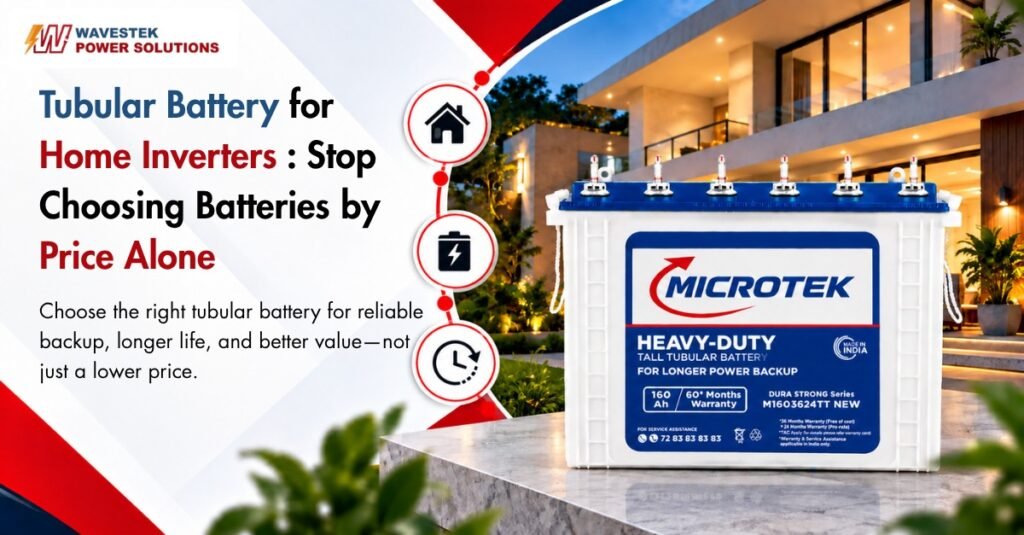
Tubular battery for home inverter
Blog, Inverter

Tubular Battery for Home Inverters: Stop Choosing Batteries by Price Alone

When buying a home inverter, most people compare prices first. The same thing often happens when choosing the battery. A lower price may look attractive, but the cheapest battery is not always the most suitable option for your home. The battery plays a major role in determining your backup time, performance, charging behaviour, and overall power backup experience. This is why choosing the right tubular battery for home inverters should be based on more than just the purchase price. Why Tubular Batteries Are Popular for Home Inverters Tubular batteries are commonly used with home inverter systems because they are designed for regular charge and discharge cycles. They can be suitable for homes where power cuts occur frequently and dependable backup is important. They are generally available in different capacities, allowing homeowners to select a battery according to their backup requirements and connected load. But buying a tubular battery simply because it is popular is not enough. Your battery should match the inverter and the amount of power you actually need. Your Backup Time Depends on More Than the Battery One common misunderstanding is that a larger battery automatically means longer backup. In reality, backup time depends on several factors. These include: Battery capacity Connected electrical load Inverter efficiency Battery condition Charging pattern Frequency and duration of power cuts For example, running only a few lights and fans will require much less power than running several appliances at the same time. Understanding your actual load helps you select a battery that provides practical backup without unnecessary spending. Don’t Choose a Battery Only by Price Two batteries with similar-looking specifications may have different prices because of differences in construction, capacity, warranty, brand, and other specifications. A very low-priced battery may not necessarily provide the right combination of performance and service support for your requirements. How to Choose the Right Tubular Battery Start by understanding your home’s backup requirements. Make a list of the appliances you want to operate during a power cut. For example, you may want backup for: Fans LED lights Television Wi-Fi router Computers Selected essential appliances Once the required load is clear, the appropriate battery capacity can be considered. It is also important to check whether the battery is compatible with your existing inverter. If you are purchasing a new inverter and battery together, selecting them as a matched system can make the installation process easier. Tubular vs Lithium Battery for Home Inverters Tubular and lithium batteries have different characteristics, and the right option depends on your requirements. Tubular batteries are a familiar choice for many traditional home inverter systems and can be suitable for households looking for a practical backup solution. Lithium batteries can offer advantages such as lower weight, compact design, and different maintenance requirements, but their suitability depends on the inverter system, budget, usage pattern, and installation requirements. Instead of choosing one simply because it is newer or cheaper, compare the technology with your actual power backup needs. Battery Maintenance Shouldn’t Be Ignored Even a good battery needs proper care. Depending on the battery type, installation, charging conditions, and maintenance requirements, regular attention can help support its performance. Keeping the battery in a suitable, ventilated location and following the manufacturer’s maintenance recommendations are important steps. If you notice reduced backup time, unusual battery behaviour, or charging issues, it may be worth. Why Wavestek Power Solutions Can Help With Your Backup Requirements Choosing a tubular battery for home inverters is easier when you have the right guidance on battery capacity, inverter compatibility, installation, and ongoing support. Wavestek Power Solutions provides power backup solutions for different residential and commercial requirements, helping customers select suitable inverter and battery solutions based on their actual usage. Their support covers product selection, installation guidance, and after-sales service, making it easier to build a dependable power backup system rather than choosing a battery based only on price. Make the Battery a Part of the Complete Backup Solution A home inverter system works best when the inverter, battery, connected load, and charging setup are properly matched. Before purchasing, understand your expected backup requirements, check compatibility, consider the battery capacity, and review the available warranty and service support. The goal should not simply be to find the cheapest battery. It should be to choose a tubular battery for home inverters that fits your power requirements and provides dependable performance over its intended service life. A little research before purchase can help you avoid unsuitable capacity, poor compatibility, and unexpected backup problems later.  

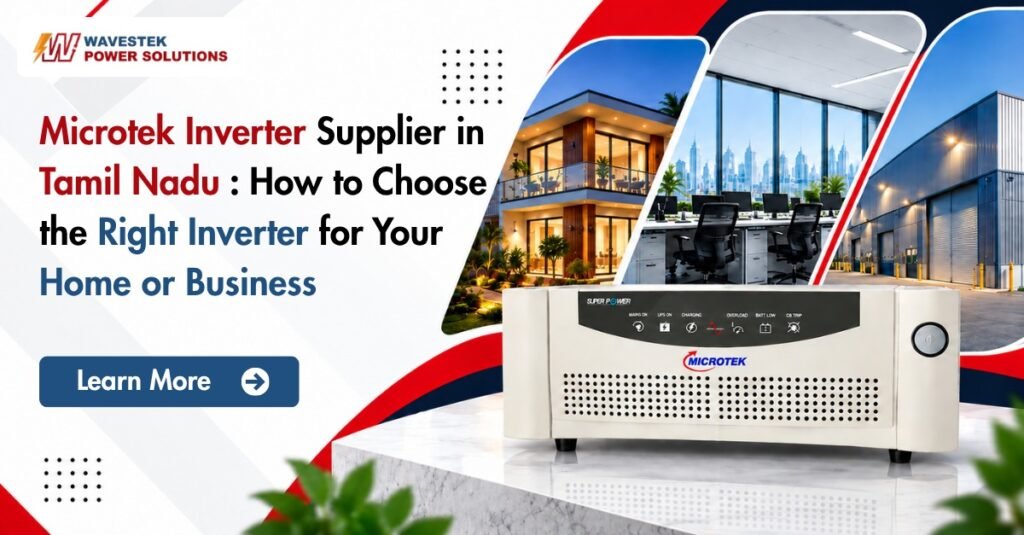
Microtek inverter for home and business power backup
Blog, Inverter

Microtek Inverter Supplier in Tamil Nadu: How to Choose the Right Inverter for Your Home or Business

Power cuts can interrupt your daily routine, slow down office work, and affect essential electrical equipment. A reliable inverter provides backup power when you need it most. However, choosing an inverter is not simply about buying a product from a popular brand. The right capacity, battery, application, and installation support all play an important role. If you are searching for a Microtek Inverter Supplier in Tamil Nadu, understanding your actual power requirements can help you choose a suitable and dependable backup solution. Why Choose a Microtek Inverter? Microtek offers inverter and home UPS solutions for different power backup requirements. Depending on the model, these systems can support essential loads such as lights, fans, televisions, computers, Wi-Fi routers, and other electrical equipment. The important thing is to select a model according to your connected load. An inverter with insufficient capacity may not support all your essential appliances, while an unnecessarily large system may increase your overall cost. How to Select the Right Inverter Start by identifying which appliances you actually need during a power cut. You may not need to run every appliance on backup. For a home, essential loads could include lights, fans, a television, Wi-Fi router, and selected appliances. For an office, computers, networking equipment, security systems, and communication devices may be more important. Once you know your required load, you can determine the appropriate inverter capacity. A professional supplier can help assess your requirements and suggest a suitable option rather than simply recommending a standard model. Don’t Ignore the Battery The inverter is only one part of a complete backup system. The battery also has a major role in determining how long your appliances can operate during a power failure. Before choosing a battery, consider: Your connected electrical load Required backup duration Battery capacity Charging requirements Available installation space Frequency of power cuts Choosing a suitable inverter and battery combination can help provide more consistent backup and improve the overall performance of the system. Microtek Inverter for Home and Business Use Power requirements are different for every customer. A household may need backup for basic appliances, while a business may depend on computers, internet connectivity, security systems, and other critical equipment. This is why choosing the right Microtek Inverter Supplier in Tamil Nadu can make the buying process easier. A knowledgeable supplier can understand your application, evaluate your load, and guide you toward an appropriate inverter and battery combination. Why Supplier Support Matters Buying an inverter is not the end of the process. Proper installation and guidance are equally important for reliable performance. A professional supplier can assist with product selection, load requirements, battery compatibility, installation, and basic maintenance guidance. This can help you avoid common mistakes such as choosing an undersized inverter or an unsuitable battery. At WavesTek Power Solutions, the focus is on helping customers find practical power backup solutions based on their actual requirements. Whether you need an inverter for your home, office, or commercial application, getting the right guidance before purchase can save unnecessary expenses later. What Affects Microtek Inverter Price? The price of a Microtek inverter depends on factors such as model, capacity, features, and battery requirements. The overall cost may also change depending on the installation and configuration needed for your application. Instead of looking only at the initial inverter price, consider the complete backup system. A properly matched inverter and battery can provide better value and dependable performance over time. Choose the Right Microtek Inverter with WavesTek Finding the right inverter becomes easier when your actual power requirements are clearly understood. Before making a purchase, check the required capacity, connected load, expected backup time, battery compatibility, and installation support. If you are looking for a Microtek Inverter Supplier in Tamil Nadu, WavesTek Power Solutions can help you explore suitable inverter and power backup options for your requirements. With the right product and proper support, you can keep essential equipment running and reduce the disruption caused by unexpected power cuts. Need help choosing the right Microtek inverter? Contact WavesTek Power Solutions to discuss your power backup requirements and find a suitable solution for your home or business.  

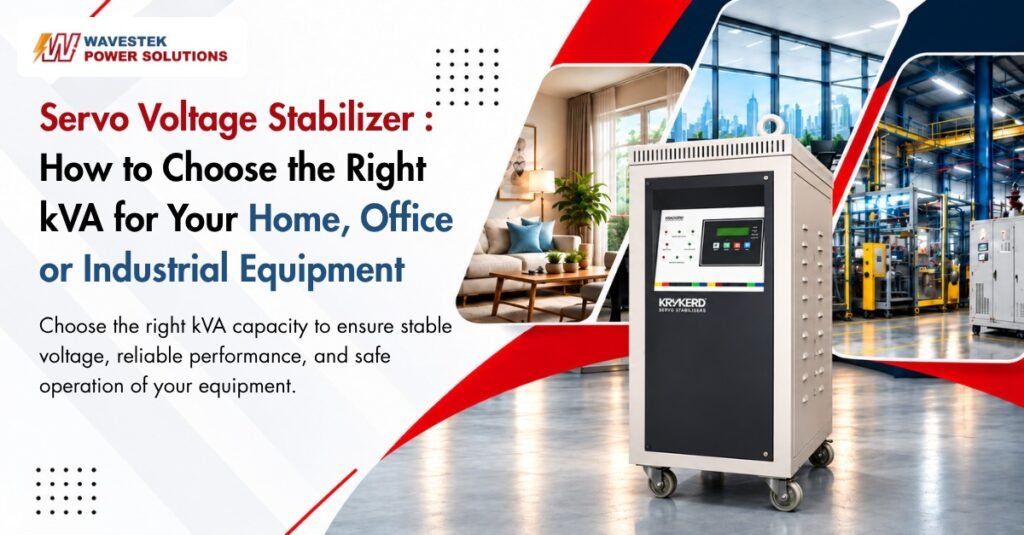
Servo voltage stabilizer for industrial equipment
Blog

Servo Voltage Stabilizer: How to Choose the Right kVA for Your Home, Office or Industrial Equipment

Voltage fluctuations may seem like a small electrical issue, but they can create bigger problems for sensitive equipment. Frequent voltage variations can affect computers, CNC machines, medical equipment, air conditioners, industrial machinery, and other electrical systems. This is where a servo voltage stabilizer can help. It is designed to regulate fluctuating voltage and provide a more stable output to connected equipment. But choosing a stabilizer is not simply about picking the highest kVA available. The right capacity depends on your electrical load, application, input voltage conditions, and the type of equipment you want to protect. What Is a Servo Voltage Stabilizer? A servo voltage stabilizer is an automatic voltage regulation system that continuously monitors the incoming voltage and adjusts the output to maintain a more stable level. It uses a servo motor-controlled mechanism to correct voltage variations. This makes servo stabilizers suitable for applications where consistent voltage is important. They are commonly used for: Industrial machinery CNC and manufacturing equipment Elevators and automation systems Commercial buildings Medical and laboratory equipment Offices and computer systems Air-conditioning systems Other sensitive electrical equipment Why Does the Right kVA Matter? One of the most common mistakes when buying a stabilizer is choosing the capacity without properly checking the connected load. The kVA rating indicates the amount of electrical load the stabilizer can handle. If the stabilizer is too small for the connected equipment, it may become overloaded. On the other hand, choosing a much larger capacity than required can unnecessarily increase the purchase cost. For this reason, calculate or assess your total connected load before selecting a stabilizer. For example, if you are planning to protect several machines in a factory, simply adding their nameplate ratings may not always give the complete picture. Starting current, motor loads, operating conditions, and future expansion should also be considered. For larger industrial applications, professional load assessment is often the safer approach. How to Choose the Right Servo Stabilizer Start with the equipment you want to protect. A stabilizer for a small office will have very different requirements from one used for a CNC machine or an industrial production line. Consider these factors: Total connected load: Identify the equipment that will operate through the stabilizer and calculate the approximate total load. Required kVA: Select a capacity that can comfortably handle the actual operating load rather than choosing a stabilizer based only on the current requirement. Input voltage range: Check how much the incoming voltage fluctuates at your location. The stabilizer’s input range should be suitable for these conditions. Single-phase or three-phase: Your electrical supply and equipment requirements determine which configuration is appropriate. Future expansion: If you plan to add machinery or electrical equipment later, consider that when selecting the stabilizer capacity. Is a 5 kVA Servo Stabilizer Enough? A 5 kVA servo stabilizer may be suitable for certain smaller applications, but there is no universal answer. The required capacity depends on the actual connected load. For example, the requirements of a small office and a workshop can be completely different even if both are using a 5 kVA system as a reference. Instead of choosing a stabilizer simply because it is a commonly searched capacity, first understand your equipment load and operating conditions. Servo vs Static Stabilizer Servo and static stabilizers both regulate voltage, but they use different technologies. A servo stabilizer uses a motor-driven voltage correction mechanism, while a static stabilizer uses electronic components for voltage regulation. The appropriate choice depends on factors such as application, required response, load characteristics, voltage fluctuation, and budget. For industrial machinery and applications with specific voltage regulation requirements, a proper assessment of the equipment and electrical environment is important before making a decision. What About Servo Stabilizer Price? Servo stabilizer prices can vary significantly depending on capacity, phase configuration, input range, construction, application, and other specifications. A 5 kVA stabilizer, for example, will not necessarily have the same price as another 5 kVA model because the specifications and configuration may differ. Rather than comparing only the initial price, look at whether the stabilizer matches your equipment and provides the required protection. Choose the Right Stabilizer with WavesTek A voltage stabilizer is an important part of protecting electrical equipment from unstable power conditions. But the right solution depends on your actual requirements. At WavesTek Power Solutions, you can get guidance for selecting suitable voltage stabilizer solutions for residential, commercial, and industrial applications. From understanding your load to selecting the appropriate kVA and configuration, proper guidance can make the buying process much easier. If you are planning to install a servo voltage stabilizer for your office, business, or industrial equipment, don’t choose the capacity based only on price or guesswork. Understand your load, check your voltage conditions, and select a stabilizer that is built for your application. Need help choosing the right servo voltage stabilizer? Contact WavesTek Power Solutions and discuss your power requirements with the team.  

Scroll to Top